
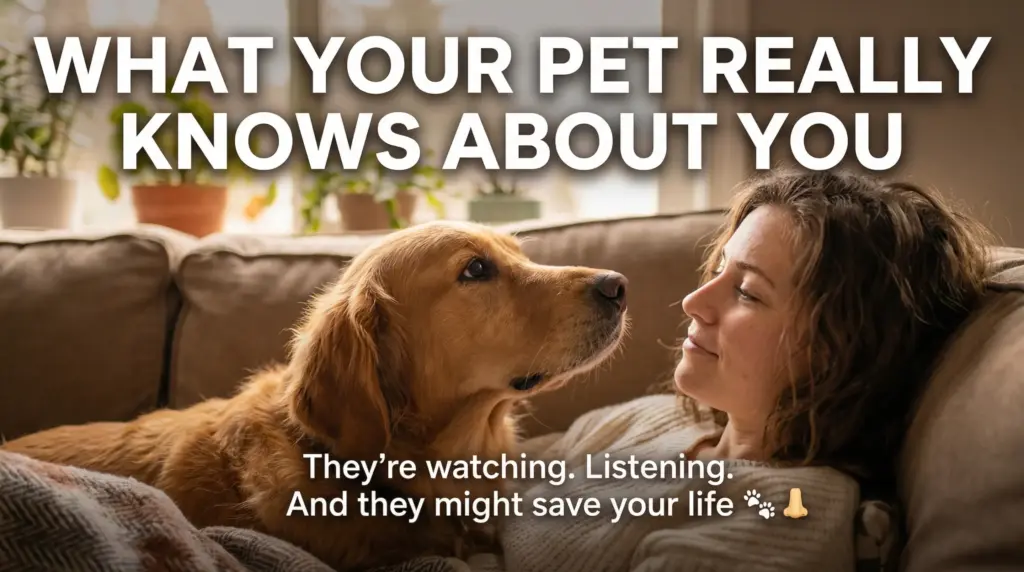
Your dog knows you had a rough day before you even take off your coat. Your cat has figured out exactly who in the household is the soft touch for treats. Our pets are watching, sniffing, and learning about us every single day, and they’ve gotten remarkably good at it.
But what exactly can they pick up on? And more importantly, what can we learn from paying closer attention to them?
Your Pet’s Secret Superpowers
Dogs have been reading humans for about 20,000 years of domestication, and they’ve become experts at it. Dr. Nicholas Dodman, professor and program director of the Animal Behavior Department of Clinical Sciences at Tufts University, puts it simply: “You can’t hide almost anything from a dog.”
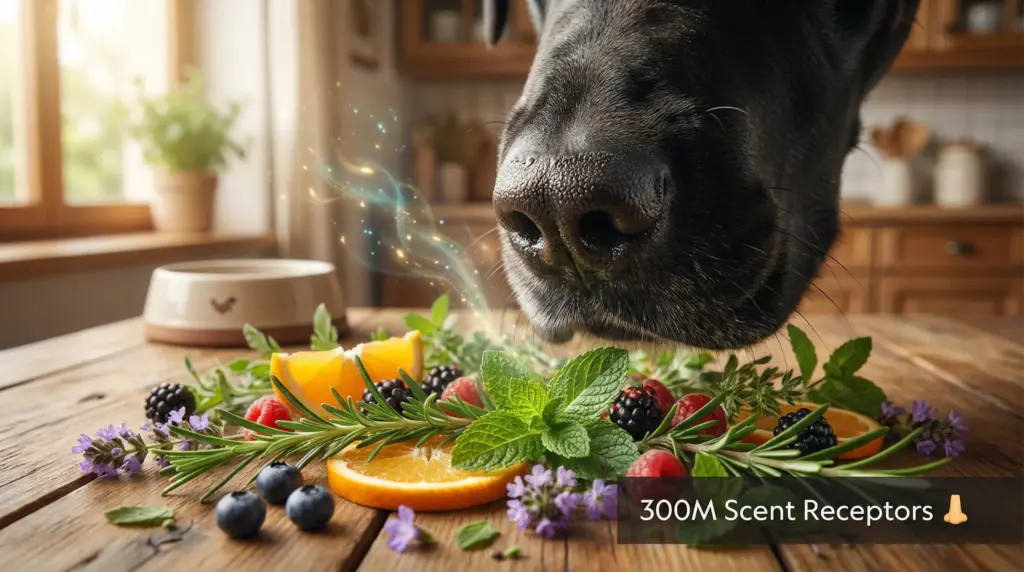
A big part of this comes down to their incredible noses. Dogs have up to 300 million olfactory receptors, compared to our measly 5 million. Their brains are built to process all that information too, with an olfactory bulb 40 times larger than ours.
Cats aren’t far behind with up to 200 million scent receptors. While they may act aloof, they’re taking in far more than they let on.
What They’re Picking Up On
Through smell and sight, pets can detect an astonishing amount of information about us. They can pick up on our hormones, adrenaline levels, heart rate, and even blood sugar changes.
They’re also watching our body language constantly, our facial expressions, how we stand, whether we make eye contact, and how tense our muscles are. As Dr. Dodman notes, “They can read you like they’re reading a book.”
All of this adds up to a surprisingly complete picture of who we are and how we’re feeling at any given moment.
Can Pets Really Detect Illness?
Medical science has trained dogs to sniff out conditions including diabetes, COVID-19, cancer, epilepsy, and narcolepsy. But even untrained dogs sometimes notice when something is off.

Dr. Dodman shared the story of one client whose dog kept sniffing at a spot on his lower leg. The man investigated and found a small black spot. He went to his doctor, and it turned out to be melanoma. The dog had no special training, he just sensed something was different.
This natural ability can show up in other ways too. Some dogs act differently before their owner has a seizure or when blood sugar drops too low.
Signs to Watch For
If your pet’s behaviour changes suddenly around you, it might be worth paying attention:
- They’re fixated on a specific part of your body
- They’re sniffing or pawing at one area repeatedly
- Their attention toward you has shifted noticeably from their usual habits
- They seem concerned or won’t leave your side when they normally would
Dr. Valli Parthasarathy, a veterinary behaviorist and co-founder of Synergy Veterinary Behavior, suggests that if your pet seems focused on something happening with you, “perhaps that would be something to have a conversation with your doctor about.”
The Myth of the “Good Person” Detector
Here’s something that might surprise you: despite what many of us believe, pets can’t actually tell if someone is a good or bad person.
A 2025 study by Rover.com found that 72% of people say their romantic relationships depend on their pet’s approval. But our pets aren’t making moral judgments about character.
What they’re reacting to is behaviour and body language. Dr. Parthasarathy explains that many human greeting behaviours, like direct eye contact and reaching out to shake hands, are actually threatening to dogs and cats.
Why Your Pet Might React Badly to Someone
There are several reasons a pet might seem wary of a particular person:
- The person’s body language feels threatening (even if they mean well)
- The person is nervous around animals, which puts the pet on edge
- The pet has past negative experiences with someone who looked or sounded similar
- Specific triggers like hats, beards, loud voices, or certain movements
Dr. Dodman describes a case where a dog was frightened of men with white beards. Investigation revealed the dog had previously had a bad experience with such a person.
As Dr. Carlo Siracusa, professor of clinical small animal behavior and welfare at the University of Pennsylvania, explains: “You might be a terrible person with one individual and a great person with your dog. That’s all your dog cares about.”
The Mirror Effect: What Your Pet Reveals About You

Perhaps the most fascinating thing about the human-pet bond is how much our animals reflect back to us about ourselves. According to Dr. Dodman, about 15% of a dog’s behaviour is linked to their human’s personality.
Fear is the clearest example. Dogs can absolutely smell human fear, and they respond to it. If you feel frightened while walking your dog, they’ll pick up on it and may either shrink back or become more aggressive.
Dr. Parthasarathy sees this regularly in her practice. When a person acts nervous around a dog, the dog often thinks: “Why are you acting kind of weird? Maybe I need to be nervous about you too.”
The Leash Connection
This plays out clearly during walks. When someone sees another dog approaching and tenses up, that tension travels straight down the leash.
“The people may not actually realize it’s happening, but the dog can feel it,” Dr. Parthasarathy explains.
Cats respond to household stress too, sometimes even more sensitively than dogs. Dr. Siracusa notes that cats can develop stress-related behaviours like excessive licking when routines change or when there’s tension at home.
Simple Steps to Build a Better Bond
Understanding how much your pet picks up on can actually help both of you. Here are some practical ways to use this knowledge.
1. Practice Calm Before Walks
Take three slow breaths before clipping on the leash. Your dog will notice the difference in your body, and walks may become more relaxed for both of you.
Low-effort option: Simply pause for a moment and drop your shoulders before heading out the door.
2. Watch Your Body Language Around New People
If your pet seems nervous around visitors, check your own tension levels first. Are you holding your breath? Standing stiffly?
Low-effort option: Sit down when guests arrive. This naturally relaxes your posture and signals calm to your pet.
3. Let Your Pet Lead Sometimes
Pets live fully in the present moment. Letting them stop and sniff during walks can be a form of mindfulness practice for you too.
Low-effort option: Even a few minutes in the garden watching your pet explore counts.
4. Pay Attention to Behaviour Changes
If your pet suddenly becomes fixated on you or a particular body part, make a mental note. It may be nothing, but it’s worth mentioning to your doctor if it persists.
Low-effort option: Keep a simple note on your phone if you notice something unusual.
5. Use Pet Time for Stress Relief
Petting your cat or dog decreases cortisol levels and blood pressure while releasing feel-good chemicals like dopamine, oxytocin, and serotonin.
Low-effort option: Even five minutes of gentle stroking while watching television provides benefits.
Quick Reference Checklist
Your pet CAN detect:
- Your emotional state
- Stress and fear
- Changes in your hormones and body chemistry
- Your routines and habits
- Potential health changes
Your pet CANNOT detect:
- Whether someone is morally good or bad
- A person’s intentions or character
- Anything beyond how they’re treated in the moment
What This Means for You
Our pets know us in ways that nobody else does. They notice our stress, sense our moods, and sometimes pick up on physical changes we haven’t even registered ourselves.
This isn’t mystical or magical, it’s the result of thousands of years of evolution alongside humans, combined with sensory abilities that far outstrip our own.
The real gift in understanding this is recognising that the relationship goes both ways. When we work on our own stress, our pets benefit. When we pay attention to their signals, we might learn something about ourselves.
As Dr. Siracusa puts it, one of the best lessons pets teach us is “respecting other individuals for who they are, not pretending they are who we want them to be.”
That’s advice worth taking, for our relationships with our pets and with everyone else in our lives.