(Most Owners Miss This)
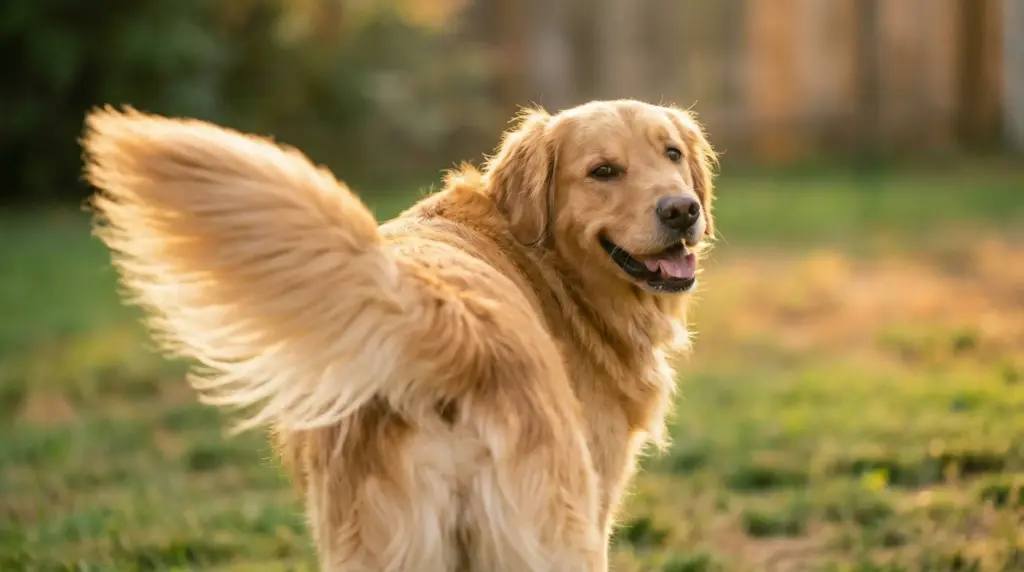
You walk through the front door. Your dog races over, tail going absolutely wild. Obviously, she’s thrilled to see you.
Right?
Maybe. Or maybe not.
Here’s something that might surprise you: that “happy” tail wag could actually mean something completely different. A 2024 scientific review published in Biology Letters analyzed over 100 studies on dog behavior and found that most of us are only catching half the message our dogs are sending.
The truth is, dogs have an entire language happening at the other end of their bodies. And once you learn to read it, you’ll never look at your pup the same way again.
The Mistake Almost Every Dog Owner Makes
Let’s get this out of the way: a wagging tail does not always mean a happy dog.
“People think wagging tail equals happy dog,” says Dr. Emily Bray, a canine cognition expert at the University of Arizona. “But it’s actually a lot more complicated than that.”
A wagging tail can signal excitement, sure. But it can also mean fear, anxiety, uncertainty, or even aggression. Dogs have been known to bite people while their tails were still wagging.
Think of it this way: a wagging tail is like a human smile. Sometimes a smile means genuine happiness. Other times it’s nervous energy, politeness, or even a grimace before a confrontation.
The good news? Once you know what to look for, your dog’s tail becomes an open book.
What Scientists Just Discovered
Researchers have been studying tail wagging for decades, and some of their findings are genuinely fascinating.
A landmark 2007 study by Dr. Giorgio Vallortigara at the University of Trieste made a surprising discovery: the direction your dog wags matters. Dogs wag more to the right side of their body when experiencing positive emotions, and more to the left when feeling negative or uncertain.
This isn’t random. It’s connected to how the brain works. The left side of the brain (which controls positive emotions) moves the right side of the body, while the right brain (which handles negative emotions) moves the left side.
Even more remarkable: a 2013 follow-up study proved that dogs can actually read these signals in other dogs. When shown videos of dogs wagging to the left, the watching dogs showed higher heart rates and signs of anxiety. Right-sided wags kept them calm.
“Perhaps the coolest thing is that dogs can perceive those asymmetries in other dogs,” says Dr. Taylor Hersh, a bioacoustician at Oregon State University who co-authored the 2024 review.
Here’s another fun fact: puppies aren’t born knowing how to wag. They start learning around three to four weeks old, when they need to communicate with their mother and siblings. A puppy’s first wags are basically saying “I’m hungry” or “I’m tired of playing.”
Your Complete Tail-Reading Guide
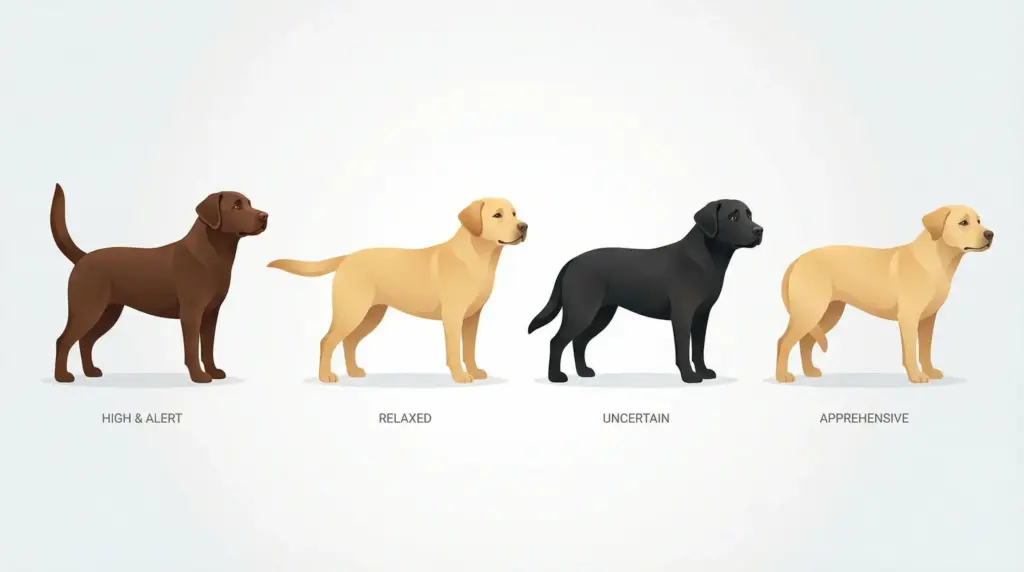
Ready to become fluent in tail? Here’s your step-by-step decoder:
1. Check the Position (This Sets the Baseline)
The height of your dog’s tail tells you their overall emotional state.
High tail (vertical or above the back): Confidence, alertness, or potential dominance. A very high, stiff tail can signal aggression.
Neutral tail (roughly horizontal): Relaxed, curious, or calmly attentive. This is often the “everything’s fine” position.
Low tail (below the spine): Uncertainty, submission, or insecurity. The dog is feeling cautious about something.
Tucked tail (between the legs): Fear or extreme anxiety. This dog needs space and reassurance, not more interaction.
2. Notice the Speed (This Shows Intensity)
Think of wag speed as the volume dial on your dog’s emotions.
Fast, vibrating wag: High arousal. This could be excitement OR agitation, so you need the other signals to know which.
Moderate, easy wag: Calm happiness. Your dog is content and comfortable.
Slow, deliberate wag: Caution or uncertainty. The dog is assessing the situation.
Frozen or stiff tail: This is a “pause” signal. Your dog wants the interaction to stop. Pay attention.
3. Watch the Direction (The Secret Scientists Cracked)
This one takes a bit more observation, but it’s incredibly telling.
Wags more to the right: Positive emotions. Your dog wants to approach and feels good about what’s happening.
Wags more to the left: Negative emotions or uncertainty. Something is making your dog uncomfortable.
Full circle wag (“helicopter tail”): Pure joy. This is the real deal. If your dog’s tail is spinning like a propeller, they are genuinely over the moon.
4. Read the Movement Style (The Final Clue)
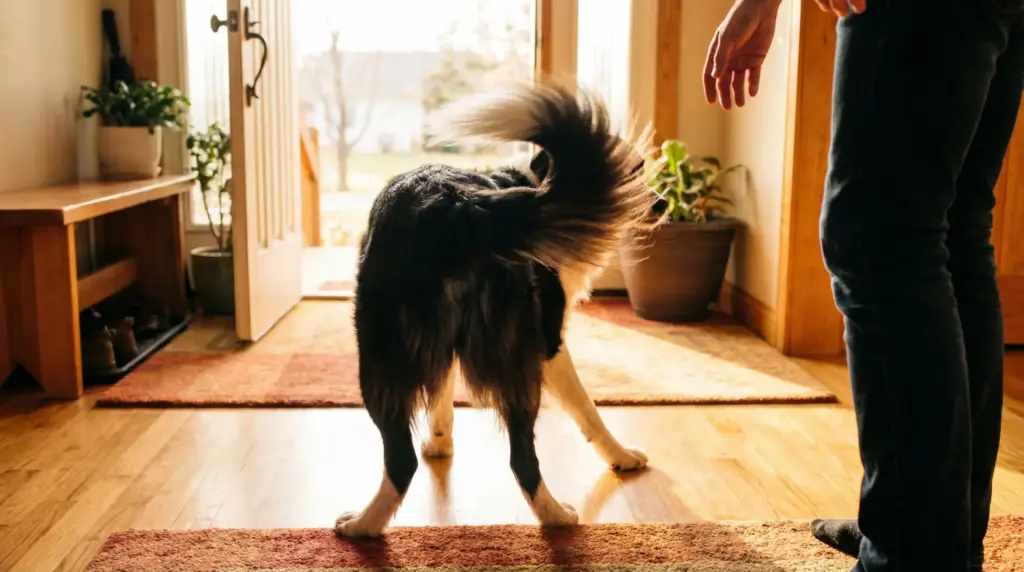
Wide, loose wags with body wiggles: Friendly and excited. The whole-body wag is the classic “I love you” greeting.
Narrow, stiff wags: Tension or warning. Something has your dog on edge.
Just the tip moving: Mild interest or a low-level warning. The dog is engaged but not committed either way.
Red Flags: When to Back Away
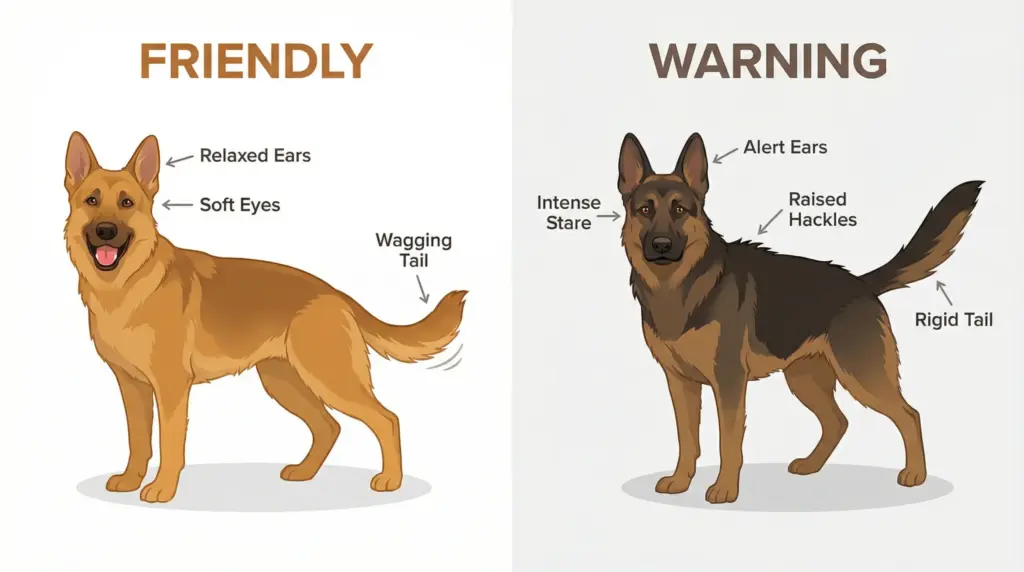
Some tail combinations are warning signs. Learn these and you could prevent a bite:
High + stiff + fast: This is not a happy dog. This is an aroused, potentially aggressive dog. Give space immediately.
Wagging with hard stare and raised hackles: Your dog is sending a clear warning. Do not approach.
Tucked tail wagging rapidly: A scared dog trying to appease. This dog needs space, not more attention.
Dr. Nicholas Dodman, professor emeritus at Tufts University and head of the Center for Canine Behavior Studies, puts it simply: “A wagging tail is akin to waving a white flag of surrender,” he says. But context is everything. A stiff, high wag is more like a raised fist.
What About Different Tail Types?
Not all tails are created equal, and that matters for reading them.
Curly tails (Pugs, Huskies, Akitas): Watch the base of the tail, not the curl. The movement starts there.
Docked tails (Boxers, Dobermans): These dogs rely more on body language. Research from the University of Victoria found that dogs with docked tails may actually experience more aggressive encounters because other dogs have trouble reading their signals.
Long, expressive tails (Golden Retrievers, Border Collies): These are the easiest to read, with a full range of visible signals.
The key is knowing your own dog’s “neutral.” Every dog carries their tail differently when relaxed. That’s your baseline for reading everything else.
Why This Actually Matters
Understanding your dog’s tail language isn’t just interesting trivia. It can prevent bites, reduce your dog’s stress, and genuinely strengthen your bond.
Dogs don’t wag their tails when they’re alone. It’s purely social communication. When your dog wags at you, they’re trying to tell you something. Now you can actually listen.
“By looking at how dogs are today, we get to travel back in time and see what the human domestication process has done in terms of dog behavior,” says Dr. Andrea Ravignani of the Max Planck Institute. “Modern dog behavior, to some extent, brings a fingerprint of early humans.”
That wagging tail has been connecting humans and dogs for tens of thousands of years. It’s about time we learned to understand it properly.
Now You Speak Tail
Here’s a challenge: watch your dog closely over the next few days. Notice which direction they wag when they see you versus when a stranger walks by. Pay attention to the height and speed when the doorbell rings.
You might be amazed at how much they’ve been telling you all along.
Does your dog do the famous “helicopter tail”? Have you noticed them wagging differently in different situations? Share your stories in the comments! And if you found this helpful, pass it along to a dog owner who needs to know.
🐕 Share this with every dog lover you know! 🐕