
You know the scene. You walk through the door after a long day, and something feels… off. The couch cushion is mysteriously disemboweled. There’s a suspicious trail of garbage leading to the kitchen. And there, in the corner, is your dog, head down, ears back, tail tucked, refusing to meet your eyes.
“He knows exactly what he did,” you think. That face says it all, right?
Here’s the thing: scientists have spent years studying that exact expression. And what they’ve discovered might completely change how you see, and communicate with, your furry best friend.
That “guilty” face isn’t guilt at all.
The Experiment That Changed Everything
In 2009, Dr. Alexandra Horowitz, a dog cognition scientist at Barnard College, Columbia University, designed a clever experiment. She wanted to know: does the “guilty look” actually mean a dog feels guilty?
Here’s what she did. Owners told their dogs not to eat a tempting treat, then left the room. Sometimes the dogs ate it. Sometimes they didn’t. When owners returned, some were told their dog had been “naughty” (whether true or not) and scolded them. Others greeted their dogs normally.
The results? They flipped everything we thought we knew.
Dogs who were completely innocent but got scolded showed MORE “guilty” behaviors than dogs who actually ate the treat but weren’t scolded. The guilty look had nothing to do with whether the dog had done anything wrong.
“A better description of the so-called guilty look is that it is a response to owner cues, rather than that it shows an appreciation of a misdeed,” Dr. Horowitz concluded.
In other words? Your dog isn’t confessing. They’re reacting to you.
What That Face Actually Means
So if it’s not guilt, what is it?
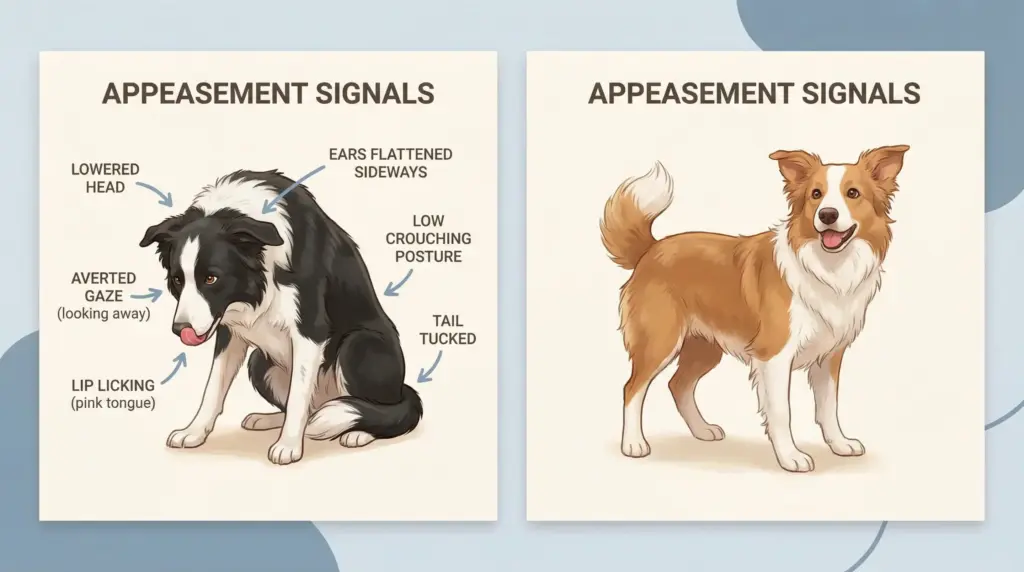
Norwegian dog trainer Turid Rugaas spent decades studying what she calls “calming signals”, over 30 different body language gestures dogs use to avoid conflict and communicate peaceful intentions. That guilty look? It’s packed with them.
The lowered head. The averted gaze. The lip licking. The tucked tail. The crouching posture. Every single one of these behaviors is a dog’s way of saying: “I see you’re upset. I’m not a threat. Please don’t hurt me.”
These are appeasement behaviors, ancient survival instincts dogs inherited from wolves. In pack life, showing submission to an angry pack member could mean the difference between getting attacked and staying safe.
Your dog isn’t thinking, “I shouldn’t have eaten that shoe.” They’re thinking, “My human seems angry. I need to make myself small and non-threatening so they calm down.”
It’s not a confession. It’s conflict resolution.
Why Dogs Can’t Actually Feel Guilt
Here’s where it gets fascinating. Scientists categorize emotions into two types: primary and secondary.
Primary emotions, like joy, fear, anger, and love, are ones dogs absolutely experience. Anyone who’s seen their pup’s whole body wiggle when they come home knows dogs feel happiness. Anyone who’s comforted a dog during a thunderstorm knows they feel fear.
But guilt? That’s a secondary emotion. It requires something more complex: the ability to reflect on your past actions, evaluate them against a moral standard, and feel bad about the mismatch.
According to Dr. Stanley Coren, professor emeritus of psychology at the University of British Columbia, dogs have roughly the emotional capacity of a two-to-two-and-a-half-year-old human. They experience the full range of basic emotions, but complex ones like guilt, shame, and pride remain beyond their cognitive reach.
This isn’t a limitation, it’s simply how dogs experience the world. And honestly? It means they live much more in the present moment than we do.
Why This Really Matters
You might be thinking, “Okay, interesting science, but does it actually matter?”
It matters a lot.
A classic study from the University of Pennsylvania found that dogs punished just 15 seconds after doing something “wrong” couldn’t connect the punishment to their action. They continued the behavior, but now showed fear and appeasement when their owner appeared.
Think about what that means. When you come home hours later and scold your dog for the destroyed cushion, they have no idea why you’re angry. They just know you’re angry. So they pull out every appeasement behavior they have.
To you, it looks like remorse. To your dog, it’s pure confusion and fear.
Even worse, this creates a cycle. Your dog becomes more anxious. Anxious dogs often engage in destructive behaviors. You come home, scold them, and the “guilty look” gets more exaggerated, because your dog is learning that your arrival often means something bad is about to happen.
And here’s what you might be missing: that destroyed cushion might be telling you something important. Is your dog bored? Anxious? Getting enough exercise and mental stimulation? The behavior is a symptom, not a crime.
What To Do Instead: 6 Steps That Actually Work
So what should you do when you come home to chaos? Here’s what the science actually supports:
1. Skip the lecture, just clean it up. Your dog can’t connect your anger to something they did hours ago. Scolding only teaches them to fear your return, not to change the behavior.
2. Only address behaviors in the moment. If you catch your dog in the act, a firm “no” and redirection works. Anything after a few seconds? That window has closed.
3. Ask why this happened. Is your dog getting enough physical exercise? Mental stimulation? Are they alone too long? Destruction is often a symptom of unmet needs.
4. Prevent access to temptations. Until your dog is trustworthy, manage the environment. Close doors. Use baby gates. Put the trash where they can’t reach it.
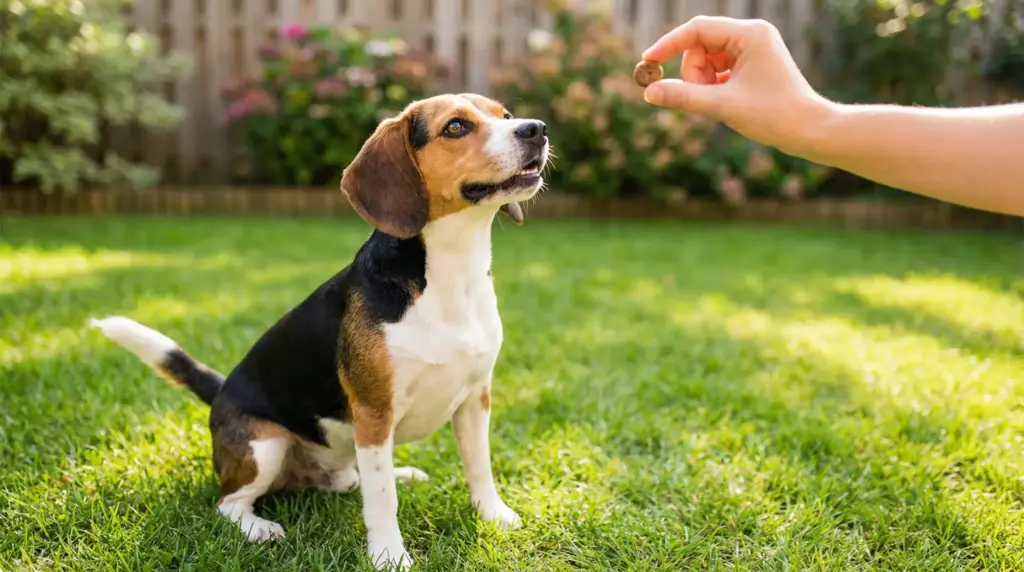
5. Use positive reinforcement. Reward the behaviors you want to see more of. Science consistently shows this is more effective, and better for your relationship, than punishment.
6. Learn to read your dog’s body language. Understanding calming signals helps you recognize when your dog is stressed, often before problems happen.
The Bright Side (And It’s Pretty Sweet)
Here’s what might be the best part of all this science.
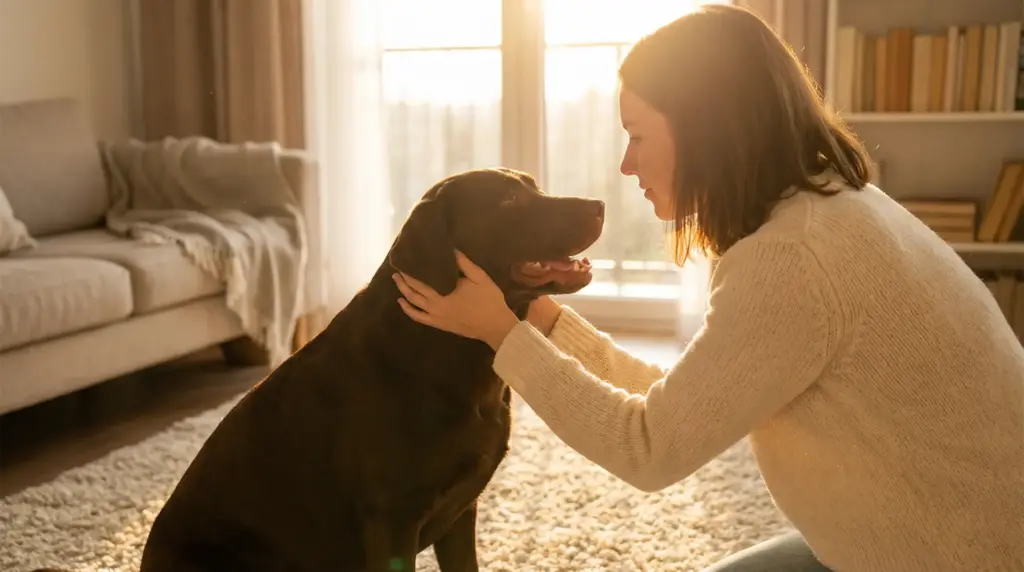
The fact that your dog shows appeasement behaviors when you seem upset? That means they’re incredibly attuned to your emotions. They can read your body language, your tone of voice, even subtle changes in your facial expression.
They’re not feeling guilty, they’re feeling connected. They care deeply about your emotional state. They want harmony with you so badly that they’ll pull out ancient wolf-survival behaviors just to say, “I love you. Please don’t be mad.”
That’s not manipulation. That’s devotion.
And once you understand this, your whole relationship shifts. You stop seeing a “bad dog” who knows better. You start seeing a loving companion who’s trying desperately to communicate with you in the only language they have.
The Bottom Line
That “guilty” face isn’t your dog admitting they did something wrong. It’s your dog saying, “I can tell you’re upset, and I really, really want things to be okay between us.”
When you think about it that way? It’s actually one of the sweetest things about them.
Seventy-four percent of dog owners believe their dogs feel guilt. Now you know the real story, and you can build an even stronger bond because of it.
Did this change how you see your dog’s “guilty” face? Drop a 🐕 in the comments! And if you know a dog parent who needs to read this, share it with them, their pup will thank you.