It was 2 a.m.
My dog stood in the doorway. Not whining. Not pawing at the bed. Just standing there, watching me with eyes that said everything her mouth couldn’t.
I sat up. She turned. Walked to the door. Waited.
I followed her downstairs and found water pooling under the sink.
She hadn’t barked or scratched or made any noise at all, but she’d told me exactly what I needed to know. And in that quiet moment, I realized something: we’d been having conversations for years. I just hadn’t been listening.

Your Dog Is Talking. You’re Just Not Hearing It.
Dogs don’t use words. They use everything else.
Their bodies tell stories. Ears forward, tail low, weight shifting from paw to paw – these aren’t random movements, they’re sentences. Complete thoughts. Entire paragraphs written in muscle and breath and the tilt of a head.
We miss it because we’re too busy. Too distracted. Too convinced that communication requires sound.
But here’s what I’ve learned: the deepest conversations I’ve had with my dog happened in total silence, and the moment I started paying attention to what she was saying without words, everything between us changed.
The Mistake We All Make
We think a quiet dog is a happy dog.
We assume tail wagging means joy. We believe that if they’re not barking, everything’s fine. We push them into situations they’re clearly uncomfortable with because they didn’t say no out loud.
But they did say no. We just weren’t listening.
Dogs communicate constantly. Every second. Every breath. The problem isn’t that they’re not talking – it’s that we’ve forgotten how to hear them.
What My Dog Taught Me About Actually Listening
She taught me that eyes can whisper.
Soft eyes, the kind that crinkle at the corners when she looks at me, mean trust. Safety. Love. Hard eyes, focused and unblinking, mean something else entirely – fear, or challenge, or intense focus on something I haven’t noticed yet.
When she glances away while I’m petting her, it’s not disinterest. It’s a calming signal. Her way of saying “I trust you” in the most vulnerable way a predator species knows how.

She taught me that tails lie.
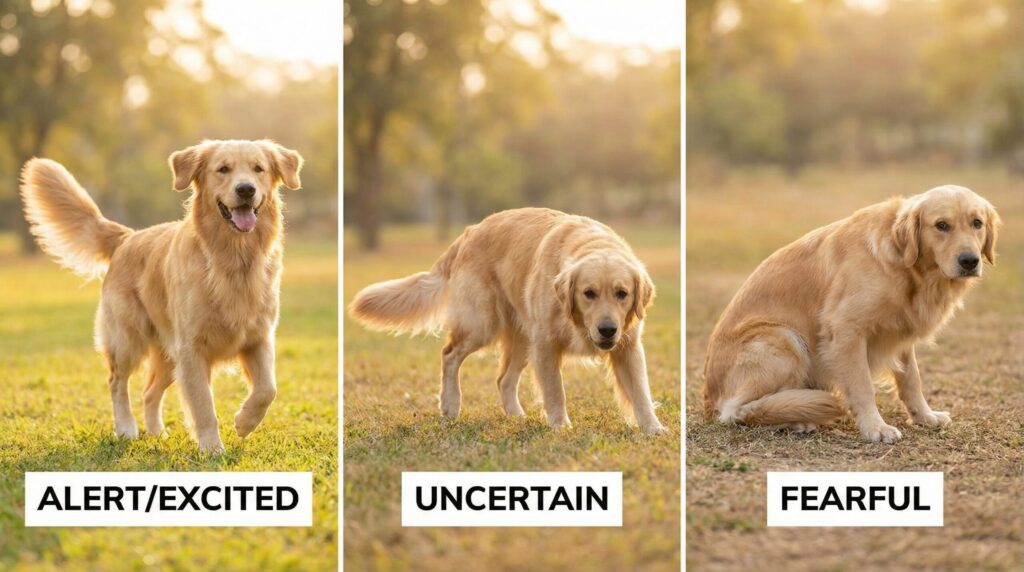
A wagging tail doesn’t always mean happiness. I learned this the hard way at the dog park when a stiff, high, fast-wagging tail turned into a warning I didn’t see coming. Now I know: helicopter wags mean joy. Low, slow wags mean uncertainty. Tucked tails mean fear. And sometimes a wagging tail is just a dog trying to figure out how they feel about something.
The tail tells you where they are emotionally. The rest of the body tells you what they’re going to do about it.
She taught me that ears are antennas.
Forward means curiosity. Tilted back means they’re asking for reassurance or trying to appease you. Pinned flat means fear or submission. My dog’s ears move constantly, tracking sounds I can’t hear, broadcasting emotions I used to miss.
Now I watch them. And I understand.
She taught me that bodies don’t lie.
When she leans against my leg, she’s not just being affectionate. She’s asking for support. When she freezes mid-step, something has changed in the environment. When she stretches into a play bow, she’s inviting joy. When her weight shifts backward, she’s uncertain about moving forward.
Dogs are honest. Their bodies betray nothing because there’s nothing to betray. What you see is what they feel, if you know how to look.
The Invisible Thread Between Us
Here’s the thing that shocked me most: my dog reads me better than most humans do.
When I’m anxious, she paces. When I’m calm, she settles. When I’m sad, she appears at my side without being called. She doesn’t do this because I’ve trained her to – she does it because dogs are masters of emotional attunement.
They notice everything. Your breathing pattern. The tension in your shoulders. The tiny micro-expressions that flash across your face before you’ve even registered feeling anything. They read your energy like it’s written in neon, and they adjust their own behavior to match.
Scientists call this co-regulation. I call it magic.
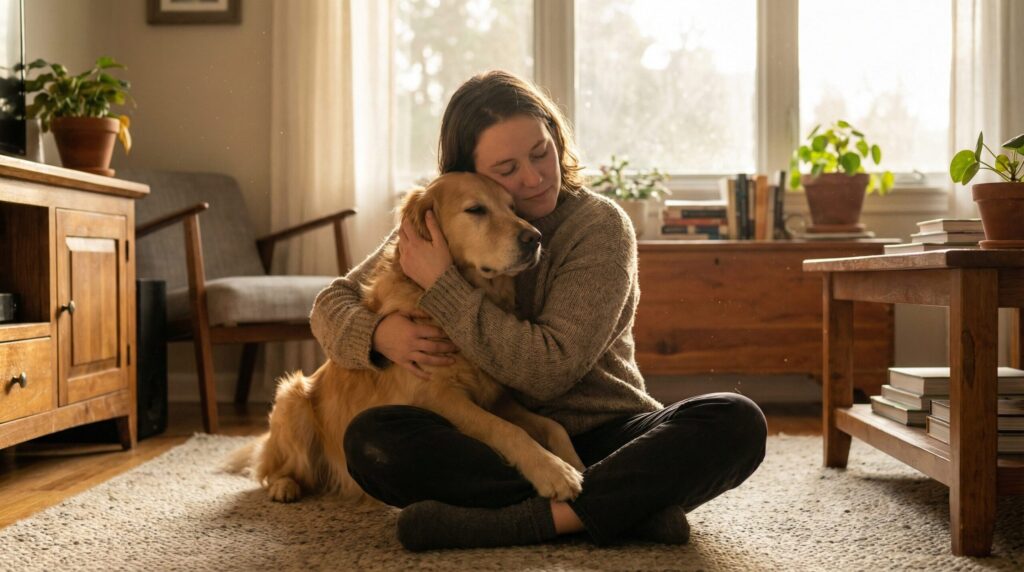
One night, I was crying about something I can’t even remember now. I hadn’t called her. Hadn’t made a sound. But within thirty seconds, she was there – pressing her weight against me, resting her chin on my knee, breathing slowly and deeply like she was trying to teach me how.
She didn’t know why I was sad. She just knew I needed her. And she showed up.
That’s when I understood: communication isn’t about words. It’s about attention. Presence. The willingness to notice what someone needs before they ask for it.
How Everything Changed When I Started Listening
I got better at timing.
I learned when she needed comfort and when she needed space. When she wanted to play and when she wanted to be left alone. I stopped forcing interactions when her body language said “not now,” and I started offering connection when she signaled she was ready.
Our training improved dramatically because I could finally see when she was confused instead of stubborn, stressed instead of defiant. I wasn’t fighting her anymore. I was working with her.
Her anxiety decreased. Mine did too.
When I started recognizing her stress signals early – the lip licking, the yawning, the sudden interest in sniffing the ground – I could remove her from situations before they escalated. She didn’t have to scream to be heard anymore because I was listening to her whispers.
And here’s what nobody tells you: when you start truly listening to your dog, they bloom under that attention. They become more confident. More relaxed. More themselves.
Because they finally feel understood.
The Stress Signals You’re Missing
Your dog is stressed right now. Maybe. I don’t know your dog. But I know you’re probably missing the signs.
Panting when it’s not hot. Lip licking when there’s no food. Yawning when they’re not tired. These aren’t random behaviors – they’re calming signals. Your dog’s way of saying “I’m uncomfortable” before they escalate to growling or snapping.
Pacing means anxiety. Freezing means fear. Excessive shedding means stress. Refusing food means serious distress.
The problem is, we often interpret these signals as something else. We think pacing is boredom. We think freezing is stubbornness. We think refusing food is being picky.
But once you learn to see these signs for what they are, you can respond before your dog reaches their breaking point. You can advocate for them in situations where they can’t advocate for themselves.
You become their translator. And that changes everything.
How to Start Listening to Your Dog Right Now
Stop talking. Start watching.
Take thirty seconds today – just thirty – and observe your dog without interacting with them. Don’t pet them. Don’t call them. Don’t give them commands. Just watch.
What are their ears doing? Where’s their weight? Is their tail up or down? Are they breathing fast or slow? Are their eyes soft or hard?
You’ll be surprised what you notice when you actually look.
Notice patterns. What makes them excited? What makes them hesitate? What triggers the lip licking or the yawning or the glance away?
Your dog is consistent. Once you know their language, you can read them like a book.
Match their energy. When your dog is anxious, your calm matters more than your words. Dogs are emotional sponges – they absorb what you’re putting out. If you’re tense, they’ll be tense. If you’re grounded, they’ll settle.
Respond, don’t correct. When you see stress signals, don’t punish them. Address the cause. If your dog is lip-licking during training, the session is too long or too hard. If they’re freezing near another dog, they need more space. If they’re yawning during grooming, they need breaks.
They’re not being difficult. They’re communicating. Your job is to listen.
What Dogs Know That We Forget
Dogs live in the present. They’re not thinking about yesterday’s walk or tomorrow’s vet appointment. They’re here. Right now. Fully present in this moment.
And they notice everything because they’re not distracted by the mental noise we carry around.
They don’t need words because they have something better: complete attention. They watch. They listen. They feel. And they expect the same from us.
This is what they teach us, if we let them: communication is less about what you say and more about how present you are when you’re saying it.
A dog who needs no words is a dog who has learned to trust that you’re paying attention. That you’ll notice. That you care enough to look.
The Gift She Gave Me
I didn’t rescue my dog. She rescued me.
Not from danger or disaster, but from the busy, distracted, half-present way I was moving through the world. She taught me to slow down. To notice. To listen with more than my ears.
Every day, she shows me what it means to communicate with your whole self. To be honest about what you feel. To trust that the people who love you will understand even when you can’t find the words.
She taught me that silence isn’t empty. It’s full of meaning, if you know how to listen.
And now, when she stands in the doorway at 2 a.m., I don’t need her to make a sound. I just need to pay attention.
Because she’s talking. She’s always been talking.
I’m finally listening.